
What WHO says
WHO's 2019 guidelines on reducing the risk of cognitive decline and dementia recommend physical activity for adults with normal cognition, and rate the certainty of that evidence as moderate.
For cognitive training, WHO's recommendation is conditional and the certainty is low. That is why we do not claim brain games protect memory.
What it does not say
These are statements about lowering risk across a population. They are not a promise that any activity will prevent memory loss or dementia in any person, and they do not apply to treating an existing cognitive condition.
Ways to keep your mind engaged
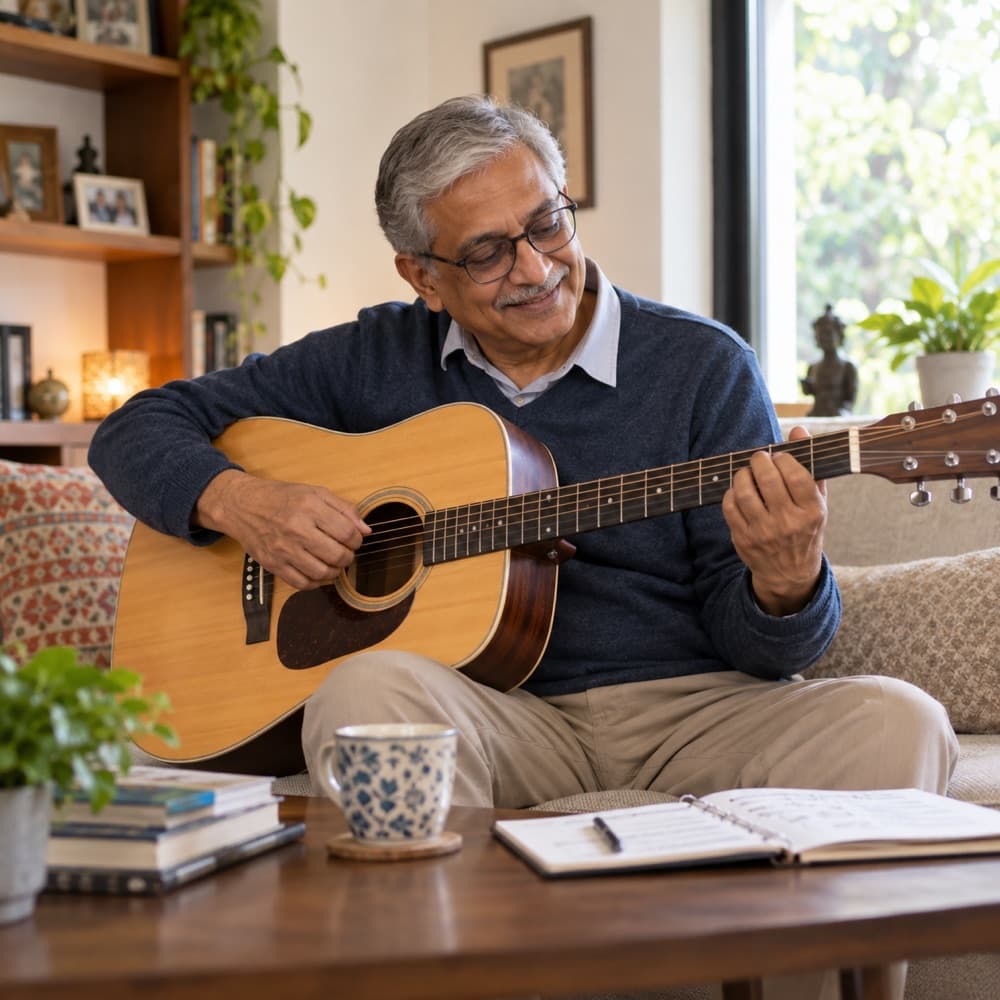
- Learn something you are curious about: a language, an instrument, a craft, or a new skill.
- Read, write, or take a class for the pleasure of it.
- Do things with other people. Many mental activities are also social ones.
- Move your body. A walk is one of the activities WHO's recommendation covers.
A ten-minute start
The step below is the same one Fit after 50 members can be given. It is chosen for enjoyment, not for a promised outcome.
Give ten minutes to something you want to learn
About 10 minutes · Easy. Enjoyment matters more than progress.
Choose a subject, puzzle, skill, book, musical piece, or creative project and begin for ten minutes.
- How to start
- Pick the one thing, set a 10-minute timer, and begin with the easiest part.
- You will need
- A subject, book, instrument, puzzle, or project you already have.
- How hard
- Easy. Enjoyment matters more than progress.
- Done when
- You spent the ten minutes, or got as far as you wanted.
Safety: This is an engagement activity, not prevention or treatment for cognitive disease.
Evidence strength: emerging. General information, not medical advice.
Be careful with big promises
Be cautious of any product or program that promises to prevent memory loss or reverse cognitive decline. If you are worried about your memory or thinking, or a family member is, see a clinician. Fit after 50 cannot assess memory and does not try to.
Where to go next
About the evidence on this page
- Review status
- Claims source-checked
- Last updated
- Claims source-checked
- Clinician review
- None recorded. No physician or other licensed clinician has reviewed this page.
Each claim listed below was compared with the named sources. The checks were prepared with AI assistance and the ratings are proposed, pending confirmation by a person. Everything else on this page is general guidance, not a separately reviewed claim.
Claims we checked
- Moderate evidenceWHO recommends physical activity for adults with normal cognition to reduce the risk of cognitive decline, and rates the certainty of that evidence as moderate.Supportive guidance exists, with more limits or less consistency than a strong rating.This rating is proposed, pending confirmation by a person.Limits: This is about lowering risk across a population. It is not a promise to prevent dementia or cognitive decline in any person. It does not apply to treating an existing cognitive condition.
- Emerging evidenceStaying mentally engaged is a reasonable activity, but the effect on cognitive decline is uncertain.Early or low-certainty evidence. We say so instead of implying more certainty.Limits: WHO describes the evidence for cognitive training as low certainty and conditional. This is not prevention or treatment for cognitive disease.
Sources
- Risk reduction of cognitive decline and dementia: WHO guidelines, World Health Organization (2019)
Limitations
- This is general education, not individualized medical advice.
- Guidelines describe what is advised for adults in general. They are not a prescription for one person.
- Talk with a clinician if you have a health condition, symptoms, or restrictions.
Update history
- : First version published.