
What the research found
In the PURE study, which followed over 139,000 adults in 17 countries, people with lower grip strength (measured with a handheld device called a dynamometer) had a higher risk of dying from any cause and from cardiovascular causes during the follow-up period. The authors reported that this association was stronger than the association between systolic blood pressure and the same outcomes.
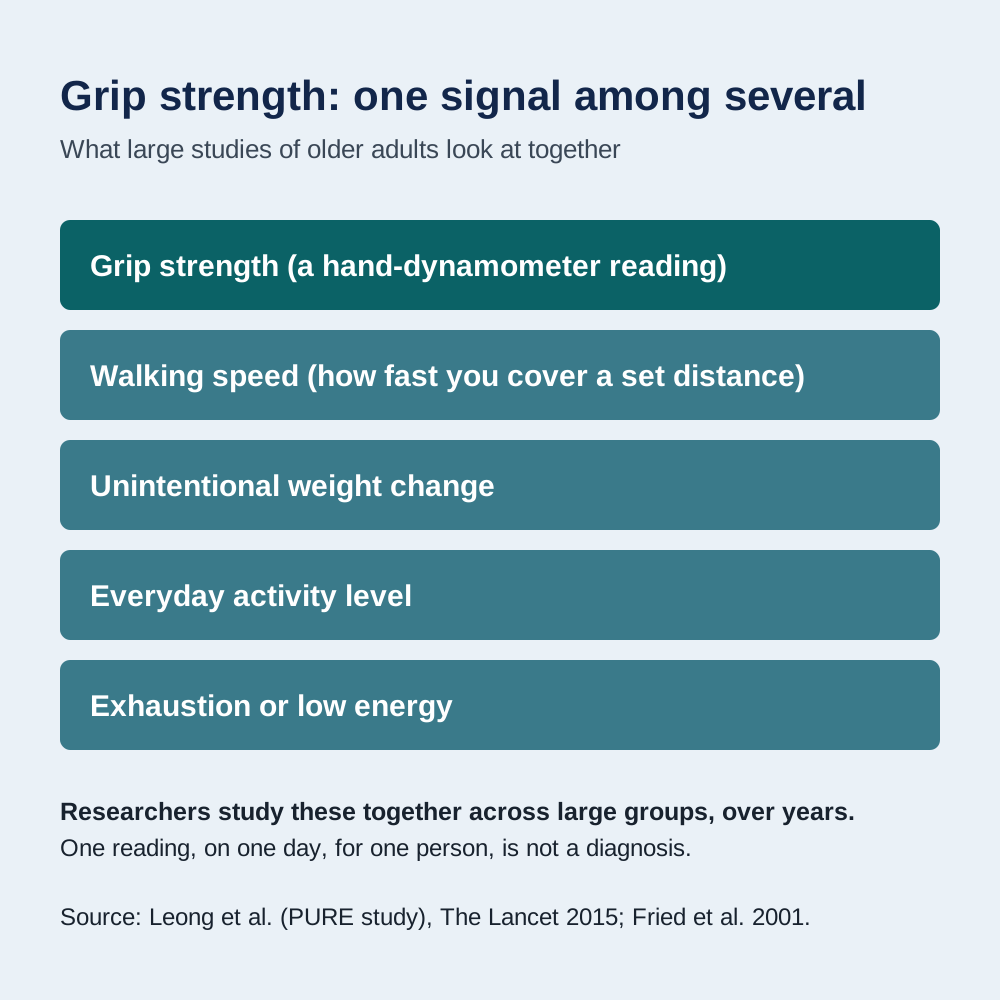
Grip strength is also one of five signs researchers commonly look at together, alongside walking speed, unintentional weight loss, low activity, and exhaustion, when studying physical frailty in groups of older adults.
What this does not tell you
This is an association across a very large group, not proof that weaker grip strength causes earlier death, or that training your grip would change your own personal risk; no such trial is cited here. A single grip reading depends heavily on the device, the technique, and which hand is dominant, so it is not a diagnosis and Fit after 50 does not offer a test, a score, or a comparison to other members.
The frailty framework researchers use is a population research tool. Fit after 50 does not use it to label an individual member.
Why it is worth knowing anyway
Grip and forearm strength support many everyday tasks directly: opening jars, carrying groceries, using tools, and holding on to something to steady yourself. Keeping it is a reasonable, low-risk goal on its own, whatever the research on mortality eventually settles.
Everyday ways to work it: carrying groceries or a loaded bag for a short distance, using hand grippers or a stress ball a few times a day, and any exercise that involves gripping something (rows, farmer's carries, a resistance band) as part of a regular strength routine.
When to ask a clinician
A sudden, one-sided change in grip strength, numbness, or new difficulty with fine motor tasks (buttons, keys) is worth mentioning to a clinician; those are different from a gradual pattern over years and are not what this guide addresses.
Try it today
Small, reviewed steps you can start now. Choose one, or save it for later.
Do one comfortable chair-strength set
About 5 minutes · Easy to moderate. It should never feel painful or unsteady.
From a stable chair, try up to five comfortable sit-to-stands, using the chair arms if helpful.
- You will need
- A sturdy chair that will not slide, placed against a wall.
- How hard
- Easy to moderate. It should never feel painful or unsteady.
- Done when
- You did up to five comfortable stands, or as many as felt fine.
- Sit toward the front of the chair, feet flat.
- Lean slightly forward and stand up, using the arms of the chair if helpful.
- Sit back down slowly.
- Repeat up to five times, resting whenever you like.
Safety: Use a chair that will not slide and keep support nearby. Stop for pain or loss of balance.
Evidence strength: strong. General information, not medical advice.
Learn more: Beginner's guide to getting fit after 50
Do two rounds of chair stands
About 10 minutes · Moderate. It should feel like work but never painful or unsteady.
From a stable chair, do up to five comfortable sit-to-stands, rest for a minute, then do a second round.
- You will need
- A sturdy chair that will not slide, placed against a wall.
- How hard
- Moderate. It should feel like work but never painful or unsteady.
- Done when
- You did up to two rounds, or as many as felt fine.
- Sit toward the front of the chair, feet flat.
- Lean slightly forward and stand up, using the chair arms if helpful.
- Sit back down slowly. Repeat up to five times.
- Rest for a minute, breathing steadily.
- Do a second round if you feel steady.
Safety: Use a chair that will not slide and keep support nearby. Stop for pain or loss of balance.
Evidence strength: strong. General information, not medical advice.
Learn more: Strength training after 50
Where to go next
About the evidence on this page
- Review status
- Claims source-checked
- Last updated
- Claims source-checked
- Clinician review
- None recorded. No physician or other licensed clinician has reviewed this page.
Each claim listed below was compared with the named sources. The checks were prepared with AI assistance and the ratings are proposed, pending confirmation by a person. Everything else on this page is general guidance, not a separately reviewed claim.
Claims we checked
- Moderate evidenceIn a large international cohort study (PURE, over 139,000 adults in 17 countries), lower grip strength was associated with a higher risk of death from any cause and from cardiovascular causes, and the association was stronger than the association with systolic blood pressure.Supportive guidance exists, with more limits or less consistency than a strong rating.This rating is proposed, pending confirmation by a person.Limits: Observational: an association across a large group, not proof that low grip strength causes earlier death, or that training grip strength changes a person's own risk. Grip strength varies by measurement device, technique and hand dominance; a single reading is not a diagnosis. The study population was adults generally, not specifically adults 50 and over.
- Moderate evidenceResearchers commonly use weak grip strength as one of five components (with unintentional weight loss, exhaustion, slow walking speed, and low physical activity) when describing physical frailty in older adults in research settings.Supportive guidance exists, with more limits or less consistency than a strong rating.This rating is proposed, pending confirmation by a person.Limits: This describes a research framework used to study frailty in populations; Fit after 50 does not use it to diagnose or label an individual member as frail. One weak grip-strength reading, by itself, says nothing about a person's frailty status.
Sources
- Prognostic value of grip strength: findings from the Prospective Urban Rural Epidemiology (PURE) study, Leong et al., The Lancet 2015;386(9990):266-273 (2015)
- Frailty in Older Adults: Evidence for a Phenotype, Fried et al., The Journals of Gerontology: Series A 2001;56(3):M146-M157 (2001)
Limitations
- This is general education, not individualized medical advice.
- Guidelines describe what is advised for adults in general. They are not a prescription for one person.
- Talk with a clinician if you have a health condition, symptoms, or restrictions.
Update history
- : First version published.