
How much sleep, and what changes
The National Institute on Aging (NIA) says older adults need about the same amount of sleep as all adults: seven to nine hours each night.
NIA also says that as you age, you tend to go to bed earlier and wake up earlier, and sleep tends to be shorter and lighter, with more waking in the night. Many older adults do not sleep well, and illness, medicines, mood, and pain can all get in the way.
Habits that may help
NIA lists these habits to try. They are tips that may help, not a treatment for a sleep problem, and results vary from person to person.
- Go to sleep and get up at the same time each day, even on weekends.
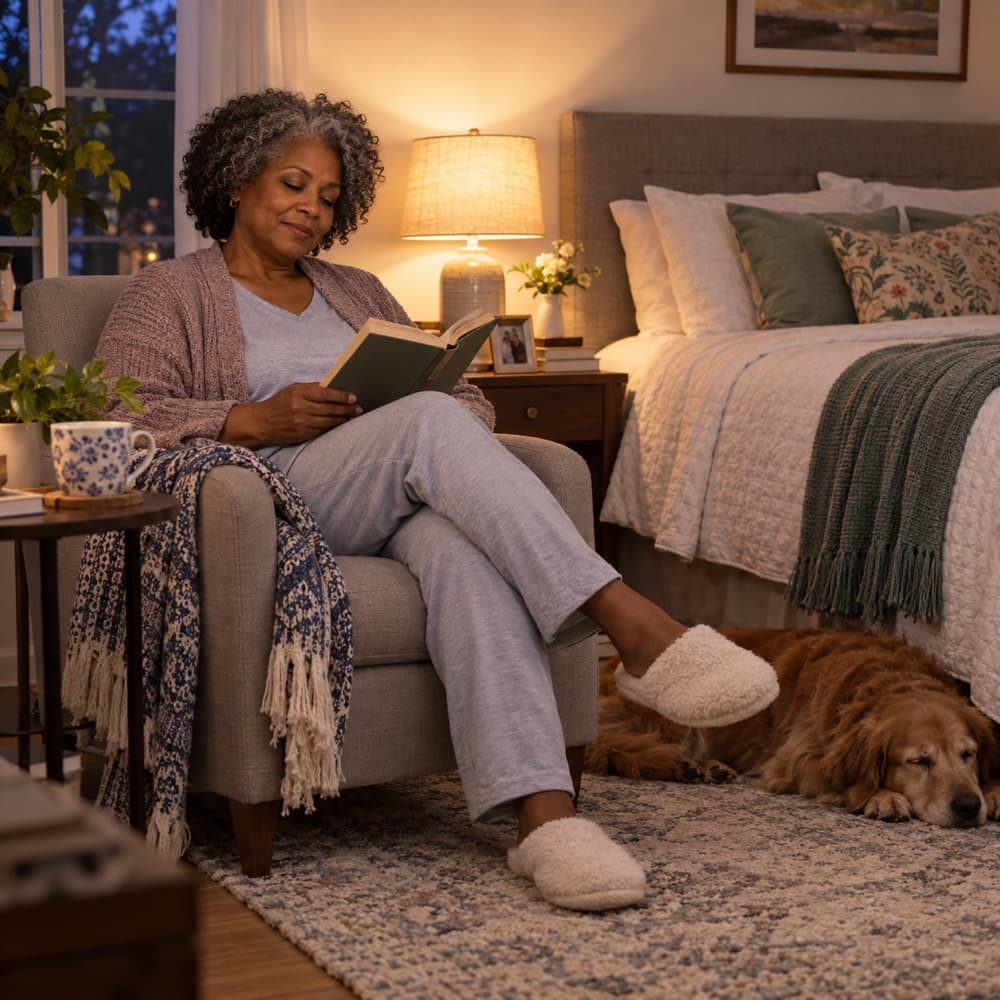
- Have a bedtime routine that helps you relax, such as reading, soft music, or a warm bath.
- Keep your room comfortable, not too hot or too cold.
- Get regular exercise, but not within three hours of bedtime.
- Avoid napping in the late afternoon or evening.
- Avoid caffeine late in the day, and avoid alcohol.
- Try not to use a television, computer, phone, or tablet in the bedroom.
- Avoid large meals within two to three hours of bedtime, and large amounts of liquid late in the day.
One step for tonight
Trying all of these at once is a lot. The step below is the same one Fit after 50 members can be given: pick one habit and try it tonight.
Pick one bedtime habit to try tonight
About 5 minutes · Very easy.
Choose one habit from a short list and try it tonight: going to bed at your usual time, a relaxing wind-down such as reading or soft music, or keeping screens out of the bedroom.
- How to start
- Pick the one habit that sounds easiest, and decide what time you will start it tonight.
- You will need
- Something calm you already have, such as a book or soft music.
- How hard
- Very easy.
- Done when
- You chose one habit and tried it tonight.
Safety: This is a habit to try, not treatment for a sleep problem. If you often cannot sleep, are very sleepy in the day, or snore loudly with pauses in breathing, talk with your doctor.
Evidence strength: moderate. General information, not medical advice.
Learn more: Sleep after 50
Keep a sleep diary
NIA suggests keeping a sleep diary for a couple of weeks if you have trouble sleeping. Note when you go to bed, when you wake in the night, and when you get up, and whether you had caffeine or alcohol or exercised that day. The patterns help a conversation with your doctor. Fit after 50's free Two-Week Sleep Diary does the averages for you and keeps everything in your browser.
When to talk with your doctor
NIA notes that sleep disorders become more common with age. It also says sleep medicines may help in the short term but carry risks and should not be used long term, and to talk with your doctor before starting any medicine or supplement for sleep.
- You are always sleepy, or you find it hard to get enough sleep at night.
- You have trouble falling or staying asleep at least three nights a week. NIA says insomnia is the most common sleep problem in adults 60 and older, and calls it chronic if it lasts more than three months.
- You snore loudly, or someone notices you pause your breathing while asleep. NIA says snoring can be a sign of sleep apnea, though not everyone who snores has it.
- You feel tingling or crawling in your legs at night that eases when you move.
A safe place to sleep
NIA suggests a lamp that is easy to reach, a nightlight in the hallway or bathroom, and removing area rugs and cords you could trip over if you wake in the night. The free Home Safety Checklist covers the rest of the path from bed to bathroom.
What this does not tell you
It cannot tell you whether you have a sleep disorder or what is causing a sleep problem. Fit after 50 has not found good evidence that a single bedtime cue improves sleep on its own, so we do not claim it. The habits above are tips to try, and a clinician can help with a persistent problem.
Where to go next
- Two-Week Sleep Diary Averages to bring to your doctor.
- Home Safety Checklist
- Weekly Activity Check
About the evidence on this page
- Review status
- Claims source-checked
- Last updated
- Claims source-checked
- Clinician review
- None recorded. No physician or other licensed clinician has reviewed this page.
Each claim listed below was compared with the named sources. The checks were prepared with AI assistance and the ratings are proposed, pending confirmation by a person. Everything else on this page is general guidance, not a separately reviewed claim.
Claims we checked
- Moderate evidenceThe National Institute on Aging says older adults need about the same amount of sleep as all adults, seven to nine hours each night.Supportive guidance exists, with more limits or less consistency than a strong rating.This rating is proposed, pending confirmation by a person.Limits: One authoritative source was checked. It is a general amount. Some people need more or less, and health conditions matter.
- Moderate evidenceThe National Institute on Aging lists habits that may help you sleep better, including a regular schedule, a bedtime routine, a comfortable room, and avoiding late caffeine, alcohol, and screens in the bedroom.Supportive guidance exists, with more limits or less consistency than a strong rating.This rating is proposed, pending confirmation by a person.Limits: NIA presents these as tips to try. They are not a treatment for a sleep disorder. Results vary from person to person.
- Moderate evidenceThe National Institute on Aging advises talking with a doctor about sleep problems, and notes that insomnia, sleep apnea, and restless legs syndrome become more common with age.Supportive guidance exists, with more limits or less consistency than a strong rating.This rating is proposed, pending confirmation by a person.Limits: Fit after 50 cannot tell whether you have a sleep disorder. Persistent sleep problems need a clinician.
- Moderate evidenceThe National Institute on Aging suggests keeping a sleep diary for a couple of weeks to find patterns to discuss with your doctor.Supportive guidance exists, with more limits or less consistency than a strong rating.This rating is proposed, pending confirmation by a person.Limits: A diary helps a conversation with a clinician. It does not diagnose anything.
Sources
- Sleep and Older Adults, National Institute on Aging, NIH (content reviewed February 6, 2025) (2025)
Limitations
- This is general education, not individualized medical advice.
- Guidelines describe what is advised for adults in general. They are not a prescription for one person.
- Talk with a clinician if you have a health condition, symptoms, or restrictions.
Update history
- : First version published.