
What the guidelines actually say
The U.S. guidelines say stretching exercises are effective at increasing flexibility, and that flexibility activities are an appropriate part of a physical activity program. They are careful in the same sentence: the health benefits of flexibility activities on their own are not known, and it is unclear whether they reduce the risk of injury.
They also say time spent stretching does not count toward the weekly aerobic or muscle-strengthening amounts. Stretching is a good companion to those, not a replacement.
What stretching is good for
The point is practical. Flexibility is the range of motion at a joint, and keeping enough of it makes everyday things easier: reaching a high shelf, turning to look behind you, getting a sock on, getting in and out of a car. MedlinePlus describes flexibility exercises as helping your joints move more easily.
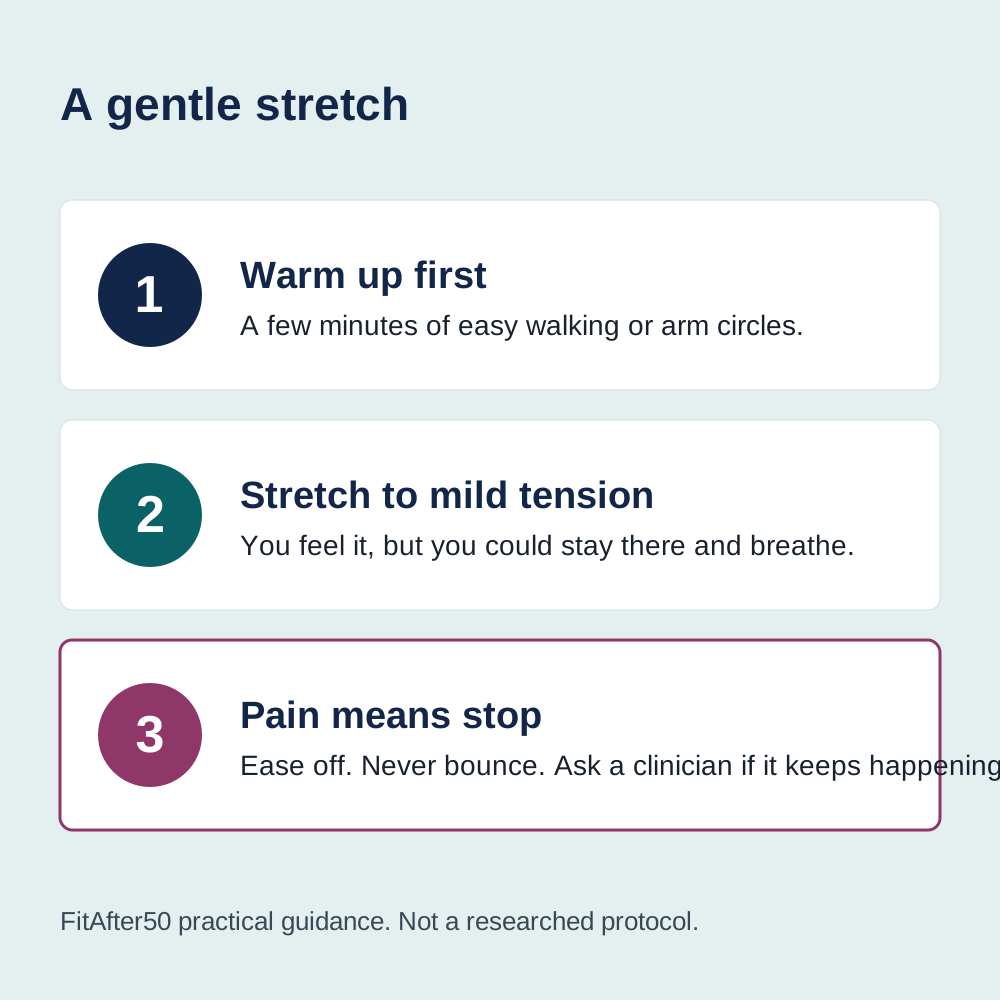
Warm up first
The guidelines say warm-up and cool-down are an acceptable part of a physical activity plan, and that studies of effective exercise programs typically include them. A warm-up before moderate or vigorous activity lets your heart rate and breathing rise gradually.
A few minutes of easy walking, marching in place, or arm circles is enough. Stretching a cold muscle hard is where many people go wrong.
How far, how long, how often
Unlike walking and strength work, the guidelines give no amount for stretching, so what follows is practical guidance from David Schutz's original Fit after 50 course, not a researched protocol.
Stretch to a point of mild tension, never to pain. Never bounce. Breathe normally. If you go too far you will not be able to hold the stretch and you risk a strain. Skipping a day or two does not undo your progress.
David's original guide, citing the American College of Sports Medicine, suggests holding each stretch for 10 to 30 seconds. We have not independently checked that figure, and the U.S. guidelines do not give one.
A gentle 10-minute sequence you could try
This is our own simple example, done seated or beside a sturdy counter. It is not a researched protocol and has not been reviewed by a clinician or physical therapist.
- Warm up for 2 to 3 minutes: walk around the room, or march in place holding a counter.
- Ankle circles, five each way on each foot, seated.
- Seated hamstring reach: sit tall at the edge of a chair, one heel forward, lean gently until you feel mild tension. Hold and breathe, then switch.
- Shoulder rolls, five forward and five back.
- Seated trunk turn: hands on opposite shoulders, turn gently to each side.
- Calf stretch at a wall or counter: one foot back, heel down, lean until you feel mild tension.
What this does not tell you
- It does not show that stretching prevents injury or pain: the guidelines say that is unclear.
- It gives no amount, hold time or number of stretches, because the guidelines give none.
- It cannot say which stretches are right for your joints, or whether stretching is right for you today.
- It does not replace walking, strength, or balance work.
Ask a clinician first if
MedlinePlus advises checking with a health care provider before starting, especially if you have trouble moving or balancing, or worry that exercise might not be safe. David's original guide adds a cautious list of times not to stretch without asking first. It is a list to ask about, not a diagnosis.
- A joint that is unstable or very loose.
- A vascular condition.
- Recent surgery.
- A recent muscle strain or joint sprain.
- A recent fracture, or osteoporosis.
- Pain when you move.
- Inflammation in a joint you would be moving.
When to stop
Video routines are being recovered
David's original Fit after 50 course included short flexibility and mobility video routines. They are being recovered and will be added after they are checked. Until then, nothing on this page depends on them.
Try it today
Small, reviewed steps you can start now. Choose one, or save it for later.
Take a two-minute movement break
About 2 minutes · Very easy.
Stand up and keep moving for two minutes: walk around the room, reach your arms overhead, or do a few sit-to-stands.
- How to start
- The next time a show, a call, or a task ends, stand up and keep moving for two minutes.
- You will need
- Nothing. A little space to move.
- How hard
- Very easy.
- Done when
- You moved for about two minutes.
Safety: Move only as far as is comfortable, and hold a counter or rail if you feel unsteady.
Evidence strength: strong. General information, not medical advice.
Learn more: How much exercise do adults over 50 need?
Take a comfortable 10-minute walk
About 10 minutes · Easy
Choose a familiar, safe route and walk at a pace that feels comfortable today.
- How to start
- Step outside, pick a familiar route, and set a 10-minute timer. Turn around at the halfway point.
- You will need
- Comfortable shoes and a route you already know.
- How hard
- Easy: a pace where you can still talk comfortably.
- Done when
- You walked for about ten minutes, or as long as felt comfortable.
Involves: being outdoors.
Safety: Use a route and pace that are appropriate for you. Stop for a new concerning symptom.
Evidence strength: strong. General information, not medical advice.
Learn more: Fitness after 50
Where to go next
About the evidence on this page
- Review status
- Claims source-checked
- Last updated
- Claims source-checked
- Clinician review
- None recorded. No physician or other licensed clinician has reviewed this page.
Each claim listed below was compared with the named sources. The checks were prepared with AI assistance and the ratings are proposed, pending confirmation by a person. Everything else on this page is general guidance, not a separately reviewed claim.
Claims we checked
- Strong evidenceThe U.S. guidelines say stretching exercises are effective at increasing flexibility and are an appropriate part of a physical activity program, but that the health benefits of flexibility activities alone are not known, it is unclear whether they reduce the risk of injury, and time spent stretching does not count toward the aerobic or muscle-strengthening guidelines.Consistent support from authoritative guidelines for the narrow claim made here.This rating is proposed, pending confirmation by a person.Limits: This is the guidelines' own careful wording. It does not say stretching is useless; it says its health benefits by itself are unproven. It says nothing about which stretches or how long to hold them.
- Strong evidenceThe U.S. guidelines say warm-up and cool-down are an acceptable part of a physical activity plan, and that studies of effective exercise programs typically include them; a warm-up before moderate or vigorous aerobic activity allows a gradual increase in heart rate and breathing.Consistent support from authoritative guidelines for the narrow claim made here.This rating is proposed, pending confirmation by a person.Limits: Acceptable, not required: the guidelines do not say skipping one is unsafe.
- Strong evidenceMedlinePlus says flexibility exercises help joints move more easily, advises checking with a health care provider before starting, especially if you have trouble moving or balancing or worry exercise might not be safe, and advises stopping and getting help if you do not feel right or have pain, extreme shortness of breath or dizziness.Consistent support from authoritative guidelines for the narrow claim made here.This rating is proposed, pending confirmation by a person.Limits: General public information for the public, not personal advice. It does not list which conditions need a check first.
- Strong evidenceThe U.S. Physical Activity Guidelines advise increasing activity gradually over time, and say inactive people should start low and go slow: begin with lower-intensity activities and gradually increase how often and how long they are done.Consistent support from authoritative guidelines for the narrow claim made here.This rating is proposed, pending confirmation by a person.Limits: Population-level guidance, not a personal plan. It does not say how fast any one person should progress.
- Strong evidenceThe U.S. guidelines advise people with chronic conditions or symptoms to be under the care of a health care provider, and say they can consult a health care professional or physical activity specialist about the types and amounts of activity appropriate for them.Consistent support from authoritative guidelines for the narrow claim made here.This rating is proposed, pending confirmation by a person.Limits: Fit after 50 cannot tell whether you have a condition that changes what is right for you.
Sources
- Physical Activity Guidelines for Americans, 2nd edition, U.S. Department of Health and Human Services (2018)
- Exercise and Physical Fitness, MedlinePlus, National Library of Medicine (last updated September 15, 2025) (2025)
Limitations
- This is general education, not individualized medical advice.
- Guidelines describe what is advised for adults in general. They are not a prescription for one person.
- Talk with a clinician if you have a health condition, symptoms, or restrictions.
Update history
- : First version published.