
Breaks are normal
Nearly everyone stops for a while: a cold, a trip, a family crisis, a hard winter. A break is not a failure, and the plan is not gone. The only real question is how to come back.
There is no catching up. Trying to make up for lost time is the most common way to get hurt or discouraged.
What the guidelines say
The U.S. guidelines say that an illness such as the flu can force an older adult to stop regular activity. Their advice for coming back is to start at a lower level than before and build up again step by step until you are at your usual amount.
They also advise increasing activity gradually over time, and that inactive people should start low and go slow: begin with lower-intensity activities and gradually increase how often and how long you do them.
What this does not tell you
They give no timetable, and they are written about illness such as the flu. For other breaks, such as travel or a busy season, the ladder below is our own example, not a researched protocol.
After a serious illness, an injury, surgery, or a hospital stay, a clinician decides when and how to restart. The guidelines advise people with chronic conditions or symptoms to be under the care of a health care provider.
An example way back
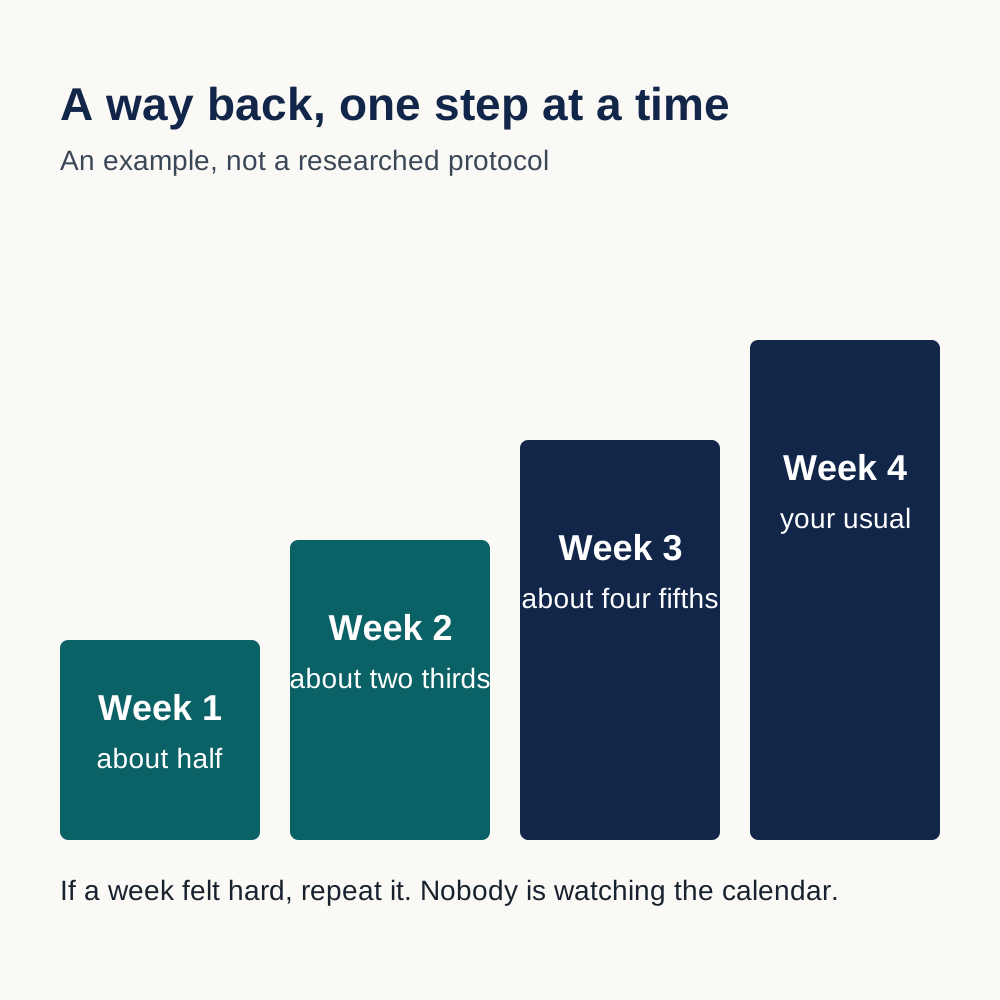
Think of a ladder, not a cliff. Start below your usual, and move up only when the last week felt comfortable. If it did not, repeat it.
Week 1: about half of your usual, and easy. Week 2: about two thirds. Week 3: about four fifths. Week 4: your usual. A ten-minute walk today is a perfectly good week 1.
Use the talk test to keep it easy
Coming back, it is easy to start at the pace you remember. Use how it feels instead. At moderate effort you can talk but not sing. If you cannot say more than a few words without a breath, slow down. The Effort Check walks you through it.
When to slow down or ask
Nobody is counting
Fit after 50 does not keep streaks or send guilt. If you are a member, you can pause a program and resume it later, and the weeks you were away do not count against you. If you are not, the same ladder works on paper.
Try it today
Small, reviewed steps you can start now. Choose one, or save it for later.
Take a comfortable 10-minute walk
About 10 minutes · Easy
Choose a familiar, safe route and walk at a pace that feels comfortable today.
- How to start
- Step outside, pick a familiar route, and set a 10-minute timer. Turn around at the halfway point.
- You will need
- Comfortable shoes and a route you already know.
- How hard
- Easy: a pace where you can still talk comfortably.
- Done when
- You walked for about ten minutes, or as long as felt comfortable.
Involves: being outdoors.
Safety: Use a route and pace that are appropriate for you. Stop for a new concerning symptom.
Evidence strength: strong. General information, not medical advice.
Learn more: Fitness after 50
Do one comfortable chair-strength set
About 5 minutes · Easy to moderate. It should never feel painful or unsteady.
From a stable chair, try up to five comfortable sit-to-stands, using the chair arms if helpful.
- You will need
- A sturdy chair that will not slide, placed against a wall.
- How hard
- Easy to moderate. It should never feel painful or unsteady.
- Done when
- You did up to five comfortable stands, or as many as felt fine.
- Sit toward the front of the chair, feet flat.
- Lean slightly forward and stand up, using the arms of the chair if helpful.
- Sit back down slowly.
- Repeat up to five times, resting whenever you like.
Safety: Use a chair that will not slide and keep support nearby. Stop for pain or loss of balance.
Evidence strength: strong. General information, not medical advice.
Learn more: Beginner's guide to getting fit after 50
Take a comfortable 10-minute walk indoors
About 10 minutes · Easy
Walk at a comfortable pace around your home, a hallway, or a shopping center, and stop when the time is up.
- How to start
- Choose a loop indoors that is clear and well lit, and set a 10-minute timer.
- You will need
- Comfortable shoes and a clear path indoors.
- How hard
- Easy: a pace where you can still talk comfortably.
- Done when
- You walked for about ten minutes, or as long as felt comfortable.
Safety: Use a route and pace that are appropriate for you. Stop for a new concerning symptom.
Evidence strength: strong. General information, not medical advice.
Learn more: Fitness after 50
Where to go next
- Starting to exercise after 50
- Effort Check: the talk test
- Steady Start program Four weeks of small steps that build
- Walking Progress Planner
- How many steps a day after 50?
About the evidence on this page
- Review status
- Claims source-checked
- Last updated
- Claims source-checked
- Clinician review
- None recorded. No physician or other licensed clinician has reviewed this page.
Each claim listed below was compared with the named sources. The checks were prepared with AI assistance and the ratings are proposed, pending confirmation by a person. Everything else on this page is general guidance, not a separately reviewed claim.
Claims we checked
- Strong evidenceThe U.S. guidelines say older adults who have to take a break from regular activity because of an illness, such as the flu, should resume activity at a lower level and gradually work back up to their usual level.Consistent support from authoritative guidelines for the narrow claim made here.This rating is proposed, pending confirmation by a person.Limits: It is written about illness such as the flu. It gives no timetable. After a serious illness, injury or hospital stay, a clinician decides when and how to restart.
- Strong evidenceThe U.S. Physical Activity Guidelines advise increasing activity gradually over time, and say inactive people should start low and go slow: begin with lower-intensity activities and gradually increase how often and how long they are done.Consistent support from authoritative guidelines for the narrow claim made here.This rating is proposed, pending confirmation by a person.Limits: Population-level guidance, not a personal plan. It does not say how fast any one person should progress.
- Strong evidenceThe U.S. guidelines advise people with chronic conditions or symptoms to be under the care of a health care provider, and say they can consult a health care professional or physical activity specialist about the types and amounts of activity appropriate for them.Consistent support from authoritative guidelines for the narrow claim made here.This rating is proposed, pending confirmation by a person.Limits: Fit after 50 cannot tell whether you have a condition that changes what is right for you.
- Strong evidenceGuidelines state that some physical activity is better than none, and that any amount of moderate-to-vigorous activity counts toward the weekly total.Consistent support from authoritative guidelines for the narrow claim made here.This rating is proposed, pending confirmation by a person.Limits: This says a small amount counts. It does not say a small amount is enough for every goal.
- Strong evidenceCDC and the U.S. guidelines describe a talk test: at moderate intensity a person can talk but not sing, and at vigorous intensity a person cannot say more than a few words without pausing for a breath.Consistent support from authoritative guidelines for the narrow claim made here.This rating is proposed, pending confirmation by a person.Limits: A rule of thumb, not a measurement. Some medicines and conditions change breathing and heart rate; a clinician can say what applies to you.
Sources
- Physical Activity Guidelines for Americans, 2nd edition, U.S. Department of Health and Human Services (2018)
- WHO guidelines on physical activity and sedentary behaviour, World Health Organization (2020)
- Measuring Physical Activity Intensity, CDC (page dated December 4, 2025) (2025)
Limitations
- This is general education, not individualized medical advice.
- Guidelines describe what is advised for adults in general. They are not a prescription for one person.
- Talk with a clinician if you have a health condition, symptoms, or restrictions.
Update history
- : First version published.