
The standard formula
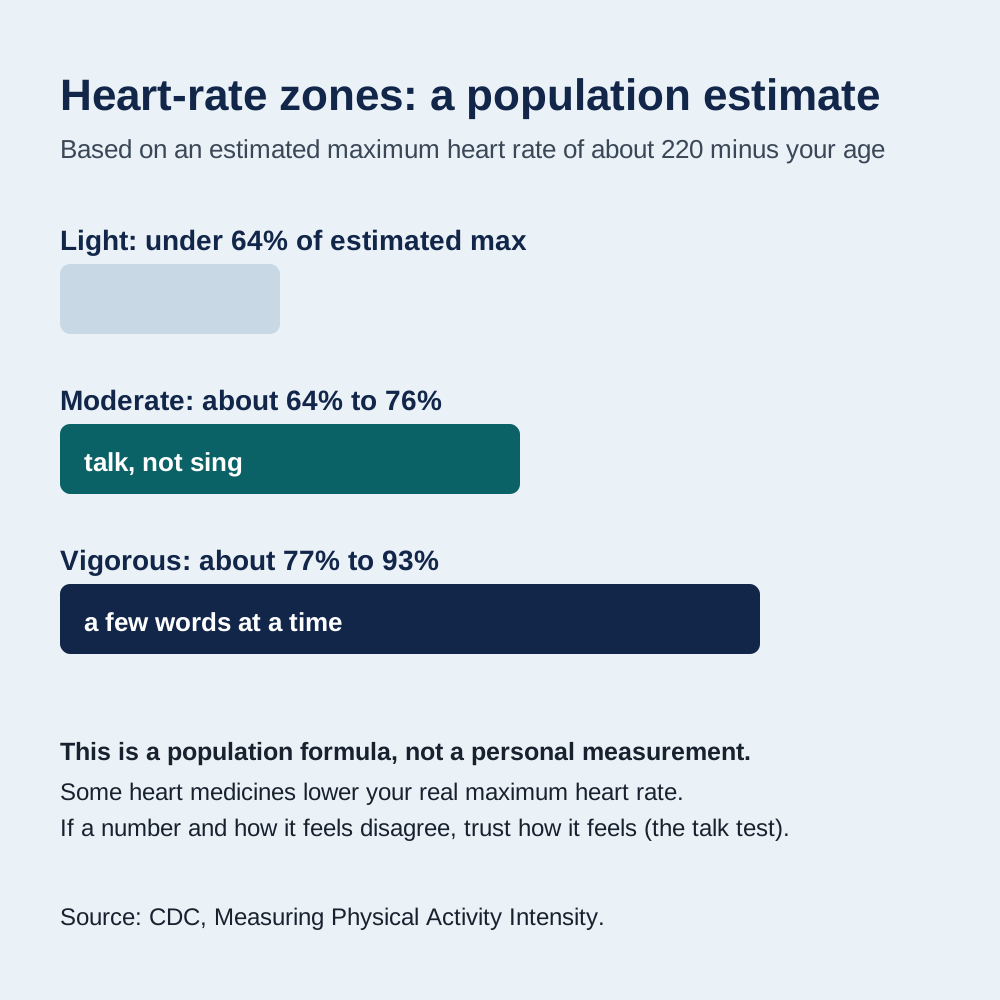
CDC describes moderate-intensity activity as roughly 64% to 76% of an estimated maximum heart rate, and vigorous-intensity as roughly 77% to 93%, using the common population estimate that maximum heart rate is about 220 minus your age. This is the same formula behind the 'zones' many fitness watches and gym cardio machines display.
What this does not tell you: why it is an estimate, not a measurement
The 220-minus-age formula describes an average across large groups; an individual's true maximum heart rate can be meaningfully higher or lower than the formula predicts, with no way to know by how much without a supervised test. It says nothing about medicines.
Some heart medicines lower a person's real maximum heart rate, which makes the standard percentages read differently for someone taking them. If you take a heart-rate-affecting medicine, ask your clinician what a reasonable target looks like for you, rather than relying on the formula.
A simpler check most people already have access to
Effort Check uses the talk test and CDC's 0 to 10 effort scale instead of a heart-rate formula, for exactly this reason: it does not require a device, and it already accounts for how an activity feels to you specifically, medicines and all.
If your watch says one zone and the talk test says another, this guide's own advice is to trust how it feels over the number on the screen.
When a heart-rate number is worth watching closely
If your heart rate feels unusually fast, irregular, or does not come back down as expected after you stop, or if you feel chest pain, dizziness, or unusual shortness of breath, stop and get medical advice. That is a different situation from checking which zone a workout falls into.
Try it today
Small, reviewed steps you can start now. Choose one, or save it for later.
Take a comfortable 10-minute walk
About 10 minutes · Easy
Choose a familiar, safe route and walk at a pace that feels comfortable today.
- How to start
- Step outside, pick a familiar route, and set a 10-minute timer. Turn around at the halfway point.
- You will need
- Comfortable shoes and a route you already know.
- How hard
- Easy: a pace where you can still talk comfortably.
- Done when
- You walked for about ten minutes, or as long as felt comfortable.
Involves: being outdoors.
Safety: Use a route and pace that are appropriate for you. Stop for a new concerning symptom.
Evidence strength: strong. General information, not medical advice.
Learn more: Fitness after 50
Take a comfortable 10-minute walk indoors
About 10 minutes · Easy
Walk at a comfortable pace around your home, a hallway, or a shopping center, and stop when the time is up.
- How to start
- Choose a loop indoors that is clear and well lit, and set a 10-minute timer.
- You will need
- Comfortable shoes and a clear path indoors.
- How hard
- Easy: a pace where you can still talk comfortably.
- Done when
- You walked for about ten minutes, or as long as felt comfortable.
Safety: Use a route and pace that are appropriate for you. Stop for a new concerning symptom.
Evidence strength: strong. General information, not medical advice.
Learn more: Fitness after 50
Where to go next
About the evidence on this page
- Review status
- Claims source-checked
- Last updated
- Claims source-checked
- Clinician review
- None recorded. No physician or other licensed clinician has reviewed this page.
Each claim listed below was compared with the named sources. The checks were prepared with AI assistance and the ratings are proposed, pending confirmation by a person. Everything else on this page is general guidance, not a separately reviewed claim.
Claims we checked
- Moderate evidenceCDC describes standard heart-rate zones as roughly 64% to 76% of estimated maximum heart rate for moderate-intensity activity and 77% to 93% for vigorous-intensity activity, using the common population estimate that maximum heart rate is about 220 minus a person's age.Supportive guidance exists, with more limits or less consistency than a strong rating.This rating is proposed, pending confirmation by a person.Limits: The 220-minus-age formula is a population-average estimate, not a personal measurement; an individual's true maximum heart rate can differ from it by a wide margin. It says nothing about how medicines that affect heart rate change the picture.
- Strong evidenceCDC and the U.S. guidelines describe a talk test: at moderate intensity a person can talk but not sing, and at vigorous intensity a person cannot say more than a few words without pausing for a breath.Consistent support from authoritative guidelines for the narrow claim made here.This rating is proposed, pending confirmation by a person.Limits: A rule of thumb, not a measurement. Some medicines and conditions change breathing and heart rate; a clinician can say what applies to you.
- Strong evidenceCDC describes an effort scale from 0 to 10, where moderate-intensity activity is a 5 or 6 and vigorous-intensity begins at 7 or 8.Consistent support from authoritative guidelines for the narrow claim made here.This rating is proposed, pending confirmation by a person.Limits: It is your own sense of effort, so two people doing the same walk may rate it differently. CDC's page does not describe how medicines or conditions change these signals.
- Strong evidenceThe U.S. guidelines advise people with chronic conditions or symptoms to be under the care of a health care provider, and say they can consult a health care professional or physical activity specialist about the types and amounts of activity appropriate for them.Consistent support from authoritative guidelines for the narrow claim made here.This rating is proposed, pending confirmation by a person.Limits: Fit after 50 cannot tell whether you have a condition that changes what is right for you.
Sources
- Measuring Physical Activity Intensity, CDC (page dated December 4, 2025) (2025)
- Physical Activity Guidelines for Americans, 2nd edition, U.S. Department of Health and Human Services (2018)
Limitations
- This is general education, not individualized medical advice.
- Guidelines describe what is advised for adults in general. They are not a prescription for one person.
- Talk with a clinician if you have a health condition, symptoms, or restrictions.
Update history
- : First version published.